Skin Concerns
Crow's Feet Wrinkles
Crow’s feet is the common name given to wrinkles which appear at the side of the eyes, stretching out towards the temples. The term ‘crow’s feet’ developed because of how the lines splay out; in a similar shape to a crow’s claw or foot. The main cause of crow’s feet is a decrease in the amount of collagen and elastin in the skin. These proteins are responsible for our skin’s elasticity, but production drops as we age.
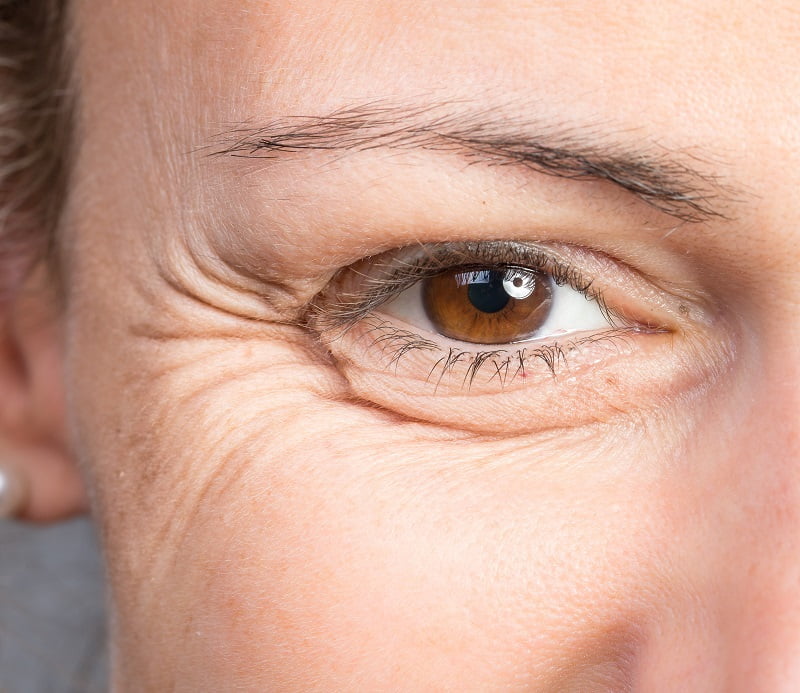
Crow’s feet is the common name given to wrinkles which appear at the side of the eyes, stretching out towards the temples. The term ‘crow’s feet’ developed because of how the lines splay out; in a similar shape to a crow’s claw or foot.
The skin around the eyes is 40% thinner than in other areas of our face, making it more delicate. This is where most people start to display the first signs of ageing. While crow’s feet and wrinkles around the eye area are normal they’re also one of the most common ageing concerns.
Laughing, concentrating, squinting or frowning; whenever you move your face your muscles contract. After years of frequent contraction, combined with environmental and lifestyle factors – such as exposure to sunshine, smoking or pollution – lines and wrinkles begin to form around the corners of your eyes. The eyes are often the first place to reveal the signs of ageing, as the skin is thinner and more prone to creasing.
The main cause of crow’s feet is a decrease in the amount of collagen and elastin in the skin. These proteins are responsible for our skin’s elasticity, but production drops as we age.
Royal Mayfair Medical Facial
There are a number of skin peels at London Skin, designed to brighten and refresh the skin. The treatment involves applying a non-toxic chemical to the surface of the skin to encourage cell turnover and exfoliation. As dead skin cells are removed, skin appears clearer and more radiant and wrinkles are softened.
London Anti-Wrinkle injectables
Injectable anti-ageing treatments are a quick and convenient way to smooth out crow’s feet wrinkles, without the need of surgery. During treatment, you can expect your practitioner to administer a small amount of solution into the skin to improve the appearance around the eyes, promoting firmness and delivering a more youthful structure to your skin around the eyes.
Dermal Needling
This treatment is also known as a collagen induction therapy which punctures fine, tiny holes in the skin to encourage skin cell renewal and stimulate the body’s natural healing response.
When this response is activated, collagen and elastin (two proteins that are fundamental in warding off wrinkles) are produced to create an immediate brighter, younger look. This treatment is also effective in reducing scarring, evening any pigmentation and UV ray exposure. This would be a good option to treat multiple concerns in one treatment.
Plasma Pen
Plasma Pen is a non-surgical, non-invasive treatment that can enhance the appearance of your skin.
The plasma gas produced by the pen encourages the production of new cells and collagen to create rejuvenation, plump skin. Superficial wounds will be apparent on the skin but will flake off in the days following the treatment to reveal gorgeous results.
Crow’s feet is the common name given to wrinkles which appear at the side of the eyes, stretching out towards the temples. The term ‘crow’s feet’ developed because of how the lines splay out; in a similar shape to a crow’s claw or foot.
The skin around the eyes is 40% thinner than in other areas of our face, making it more delicate. This is where most people start to display the first signs of ageing. While crow’s feet and wrinkles around the eye area are normal they’re also one of the most common ageing concerns.
Laughing, concentrating, squinting or frowning; whenever you move your face your muscles contract. After years of frequent contraction, combined with environmental and lifestyle factors – such as exposure to sunshine, smoking or pollution – lines and wrinkles begin to form around the corners of your eyes. The eyes are often the first place to reveal the signs of ageing, as the skin is thinner and more prone to creasing.
The main cause of crow’s feet is a decrease in the amount of collagen and elastin in the skin. These proteins are responsible for our skin’s elasticity, but production drops as we age.
Medical Facials
At The London Skin Clinic, our medical-grade facials are designed to gently refresh and support healthy skin function. Each treatment is tailored to your skin type and concerns, focusing on exfoliation, hydration, and restoration of surface balance.
Your clinician may recommend a peel or enzyme-based option to help refine texture and promote a brighter, more even-looking complexion. All formulations are non-toxic and selected according to your skin’s individual tolerance and goals.
Cosmetic Injectable Consultations
Our injectable consultations are comprehensive assessments conducted by qualified health practitioners. During your appointment, we’ll review your facial anatomy, expression patterns, and aesthetic goals to determine whether a prescription-only cosmetic treatment may be suitable.
If clinically appropriate, treatment options will be discussed and administered under medical supervision. This ensures any product used is prescribed specifically for you and provided safely within current AHPRA and TGA guidelines.
Dermal Needling
Dermal needling, also called collagen-induction therapy, is a minimally invasive procedure that uses fine, single-use needles to create controlled microchannels in the skin. This process supports natural renewal and helps maintain smoother, more balanced skin texture.
Following treatment, you may experience mild redness or warmth as part of the normal healing response. Your practitioner will advise on an appropriate treatment plan and aftercare routine to suit your skin’s condition and sensitivity.
Plasma Pen
Plasma Pen treatment is a non-surgical skin procedure that uses a fine electrical arc to create precise micro-injuries on the surface of the skin. These small points stimulate the body’s natural repair response, encouraging tissue regeneration and skin contraction in the treated area.
The procedure is performed by trained clinicians in a controlled environment. Mild redness or small carbon crusts can appear for a few days as the skin renews. Your practitioner will provide guidance on how to care for the area to support a smooth recovery and optimal outcome.